At Ferncliff Camp and Conference Center near Little Rock, Arkansas, people have gathered for generations to spend time outdoors, build relationships, and experience the gifts of Creation. Ferndale Creek has always been part of that story, even during the years when an artificial lake covered this portion of its path.
Ferncliff has now removed the outdated dam that created the lake. Ferndale Creek is flowing through the area again, beginning a new chapter for this landscape.
Removing the dam reconnects the creek, improves habitat, and gives the land a healthier way to manage water. It also gives campers, retreat guests, students, volunteers, and visitors an opportunity to watch a living ecosystem recover over time.
The finished landscape will not appear overnight. Streams move. Plants take root. Wildlife returns. Rain reveals where the land needs additional care. Our restoration team will continue studying the site and responding thoughtfully as the creek settles into its natural course.
This is careful, long-term work. It reflects the kind of place Ferncliff strives to be. Explore the Full Transform Campaign.
Support the Stream Restoration Project

Where is the project, and why does this location matter?
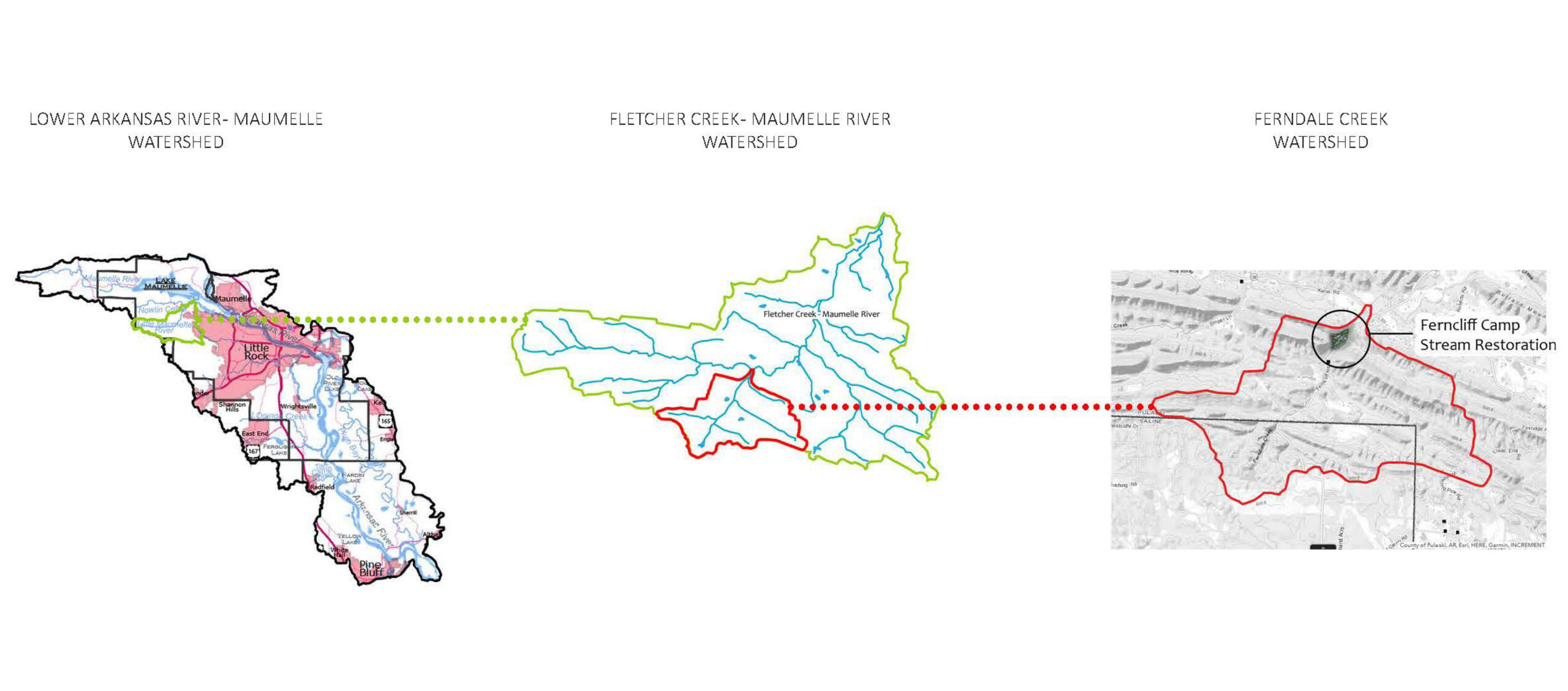
 The Ferndale Creek restoration is located at Ferncliff Camp and Conference Center near Little Rock, Arkansas. Ferndale Creek is part of the larger Maumelle River watershed and ultimately flows into the Arkansas River, one of the nation’s major waterways.
The dam at Ferncliff was the only dam in this watershed. Removing it reconnects upstream and downstream habitat, allowing water and aquatic life to move through the creek system more naturally.
Plains Bluebelly Darter
Site studies also identified the Bluebelly form of the Plains Darter in Ferndale Creek. This small native fish is recognized in Arkansas as a Species of Greatest Conservation Need. Joel has called it “a tiny fish with a big story” because it represents the resilience of the creek and the importance of reconnecting healthy habitat.


- What changed?
- Ferncliff removed the outdated dam that created the former Ferncliff Lake. Ferndale Creek now flows through the area again.
- Why does the restoration matter?
- Restoring a free-flowing creek can improve water quality, reconnect wildlife habitat, reduce erosion, support wetlands and native plants, and benefit the larger Little Maumelle watershed.
- What happens next?
- Ferncliff and its project partners will continue planting, monitoring, and caring for the site as the creek and surrounding habitat become established.


Current Project Update
Why Is Ferncliff Restoring Ferndale Creek?
The lake holds many good memories for people who have spent time at Ferncliff. We honor those memories. We also knew that the aging dam, difficult shoreline, ongoing maintenance, and ecological condition of the area called for a different approach.
After years of study and conversation, Ferncliff chose to remove the dam and restore Ferndale Creek. The decision reflects a simple belief: when land and water are entrusted to our care, we have a responsibility to pay attention and act with the future in mind.

How Stream Restoration Helps Water and Wildlife
| Benefit | How it helps |
| Improve water quality | A healthy stream and wetland system can slow water, capture sediment, and filter pollutants before they travel downstream. |
| Reconnect wildlife habitat | Restoring the creek’s natural flow creates healthier conditions for fish, birds, amphibians, insects, mammals, and native plants. |
| Manage erosion and stormwater naturally | Native vegetation, wetlands, and carefully placed natural materials help stabilize soil, guide the movement of water, and reduce erosion during heavy rain. |
| Increase biodiversity | The restored corridor will include flowing water, wetland areas, native meadow, and streamside vegetation. Together, these areas can support a wider variety of plants and wildlife than the former lake provided. |
| Create opportunities for learning | Over time, Ferndale Creek can become a living classroom where campers, retreat guests, students, volunteers, and community members learn about watersheds, wildlife, restoration, and Creation care. |
What Does Stream Restoration Look Like?
-

- View of Ferncliff Lake from Stone Bridge on June 26, one month after the lake was drained.
-

- Dam removal crews remove the center of the dam first so that the stream can begin flowing before they continue to remove the sides of the dam.
-
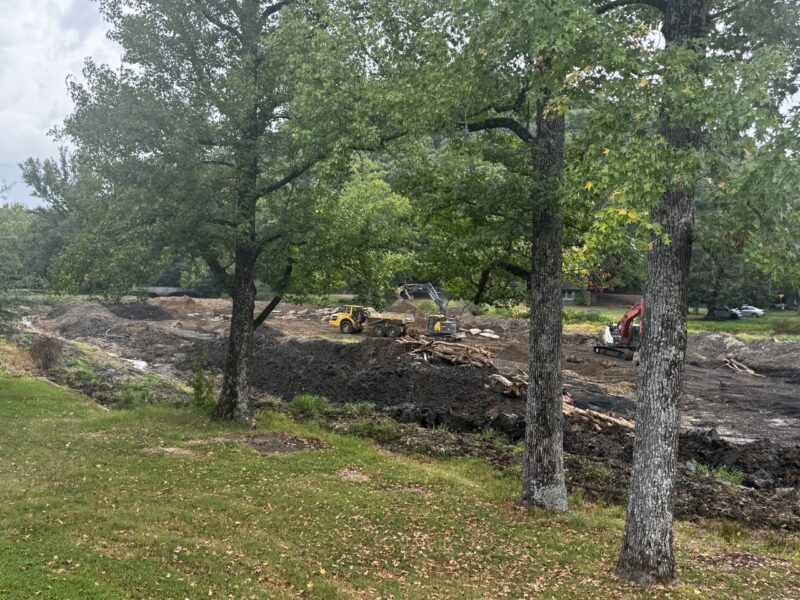
- Crews work August 8, 2026 laying rock on stream near the Stone Bridge.
Stream restoration is not the same as constructing a building from a finished blueprint. The creek itself helps show us what the site needs.
Our team observes how water moves, where soil is vulnerable, which plants become established, and how wildlife uses the area. We can then respond with carefully selected techniques that support the creek without unnecessarily restricting its movement.
Those techniques may include native planting, wetland restoration, biodegradable erosion-control materials, and the placement of logs or stones to protect streambanks and improve habitat. Constructed riffles may also be used to create varied water movement and better conditions for aquatic life.
Some parts of the landscape will change quickly. Others will take several growing seasons. Monitoring and maintenance are not signs that the restoration is unfinished. They are part of doing the work responsibly.
Why Healthy Streams Matter



- You do not need to be a scientist to understand why healthy streams matter. Streams carry water through communities. Wetlands slow and filter that water. Plant roots hold soil in place. Insects, fish, birds, amphibians, and mammals depend on the connected habitats found along a stream corridor.
- Ferndale Creek supports a surprisingly rich variety of life.
- For visitors who want to learn more, the creek can become a place to explore these relationships firsthand. For those simply looking for a quiet place outdoors, it can also be a place to walk, reflect, and enjoy moving water.
How Ferndale Creek Connects to Ferncliff’s Mission


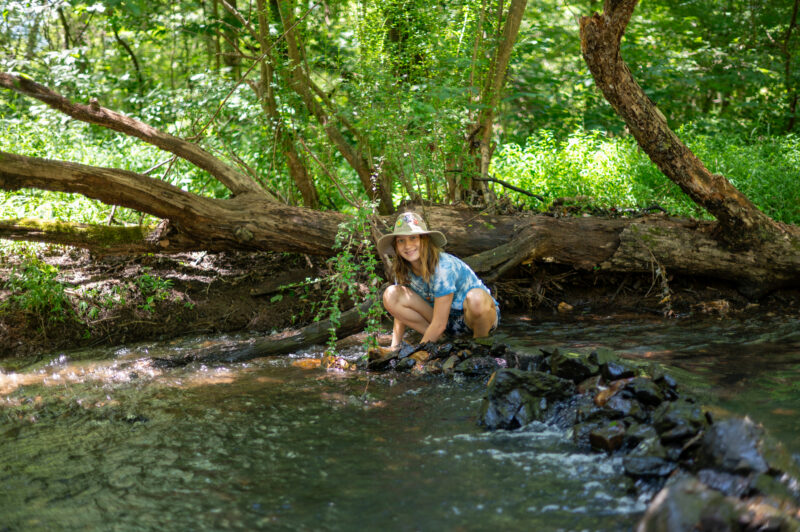
- At Ferncliff, caring for Creation is part of our calling. The health of Ferndale Creek affects more than Ferncliff’s property. By restoring the creek, improving habitat, and reducing erosion, Ferncliff is investing in the health of a connected natural system.
- The project also gives people a chance to witness restoration firsthand. Campers and visitors can see that caring for the environment is not simply an idea. It is something communities can practice together. Learn how you can help support our mission.
What Will Visitors See at Ferndale Creek?
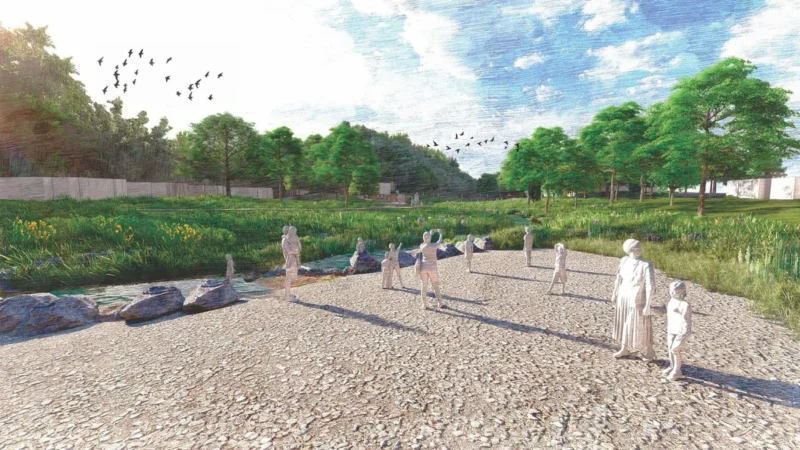
- The former lake area will gradually develop into a diverse stream corridor with flowing water, wetlands, native meadow, streamside vegetation, and places for people to experience the landscape.
- Newly restored areas do not look finished immediately. Visitors may initially see open ground, young plantings, erosion-control materials, temporary grasses, or muddy conditions after rain. These early stages protect the soil and prepare the site for deeper-rooted native plants.
- Potential future visitor features may include trails, stream access points, boardwalks, seating, educational signs, and places to observe the water and wildlife. These features are subject to final design, funding, permitting, and site conditions.


Ferndale Creek Restoration FAQ for Retreat Groups
Q: Will the stream restoration change the retreat experience we booked?
A: Your retreat experience remains our priority. Your reserved lodging, meeting spaces, meals, and planned activities will be prepared for your group. We have already considered how the restoration may affect guest routes and gathering areas, and we will make any needed adjustments before you arrive. If an activity or location needs to be moved, we will arrange an appropriate alternative and communicate it to your group leader.
Q: What happened to Ferncliff Lake?
A: Ferncliff completely removed the outdated dam that created the lake and is restoring Ferndale Creek as a natural, free-flowing stream. Returning guests will notice that this area looks different, but the places and experiences that make Ferncliff a welcoming retreat destination remain available.
Q: Why did Ferncliff remove the dam and restore the stream?
A: Restoring the creek improves water quality, supports wildlife and native habitat, and helps the landscape manage water and erosion more naturally. It is one way Ferncliff is caring for Creation and preparing the campus for future generations.
Q: What will the completed area look like?
A: The area will gradually become a natural stream corridor with moving water, wetlands, native meadow, and streamside plants. Because healthy restoration takes time, the landscape will continue to change as vegetation grows.
Q: How long will the project take?
A: The most visible work happens in phases, while planting and care for the new stream corridor will continue over time. You do not need to follow the construction schedule yourself. Ferncliff will plan around your event and will contact your group if anything requires an adjustment.
What guests may notice
Q: What should our group expect during our stay?
A: The dam has already been removed. Guests may still see landscaping, planting, erosion-control materials, workers, equipment, temporary fencing, or occasional project noise near the restoration area. Work schedules can change, but Ferncliff coordinates around known activity and considers your lodging, meetings, worship, and rest time. If current work could meaningfully affect a reserved space, route, activity, or schedule, we will contact your group leader and arrange the best available alternative.
Q: What will the restoration area look like during our visit?
A: The restoration area may look like a landscape in progress. Guests may see new plantings, seeded areas, erosion-control materials, temporary fencing, or muddy conditions after rain. These are expected parts of helping the creek and native vegetation become established. Your event spaces and guest routes will be prepared and cared for before your arrival.
Q: Is Ferncliff still a scenic place for a retreat?
A: Absolutely. Ferncliff’s 1,200-acre campus still offers wooded surroundings, trails, porches, firepits, gathering areas, and peaceful places to rest and connect. The former lake area looks different, but the natural setting and hospitality your group is coming to experience remain at the heart of your stay.
Access, meetings, and outdoor gatherings
Q: Are any roads, sidewalks, parking areas, or trails closed?
A: Ferncliff plans guest routes before groups arrive. If a road, sidewalk, parking area, or trail near the project needs to be redirected, we will provide a clear route, mark closed areas, and share the information your group needs.
Q: Will our reserved lodging and meeting spaces still be available?
A: Yes. Ferncliff’s retreat lodging, meeting facilities, and dining spaces remain in use. We will prepare the spaces included in your event plan. If access or nearby work requires a change, we will contact your group leader and arrange the best available alternative before arrival.
Q: Will the project affect photos, worship, or outdoor gatherings?
A: Your group will still have welcoming places for worship, photos, reflection, and outdoor gatherings. Ferncliff has alternative sites that can accommodate these experiences away from the restoration area. Our team will match your group with a location that fits its size, accessibility needs, and schedule.
Activities
Q: Will our group still have outdoor and community-building activities?
A: Yes. Ferncliff’s nature and community-building activities are extensive and are not limited to the restoration area. Depending on your group’s plan, season, and staffing, options may include hiking, nature exploration, the labyrinth, indoor bouldering, field or indoor games, service activities, firepits, evening gatherings, and roasting s’mores. We will help your group select and schedule the right experiences.
Q: Will our group still be able to enjoy nature at Ferncliff?
A: Yes. Ferncliff offers many ways to experience nature beyond the restoration area. Our team can recommend trails and outdoor spaces that fit current conditions, your group’s age and mobility, and the kind of experience you want.
Q: What water activities are available?
A: Water activities are no longer available at the former Ferncliff Lake. Belden Pond is a separate location, and Ferncliff may also use other alternative sites for water-based experiences when they are in season and included in your event plan. Our team will explain the available options and arrange the appropriate site in advance.
Q: Can our group learn about the restoration?
A: Learning about the restoration is optional. If your group is interested, we may be able to arrange a short conversation, guided walk, or nature-learning experience. If it is not part of your event, you can simply enjoy the rest of your retreat.
Safety
Q: How is the restoration area managed for guest safety?
A: Ferncliff manages the restoration area separately from guest activity areas. Boundaries and closures will be marked, and your group will be directed to the appropriate routes and spaces. Our team reviews current conditions as part of preparing for arriving groups.
Q: What should leaders tell children and youth?
A: Children and youth should remain with their group’s normal supervision and follow marked boundaries and staff directions. Ferncliff will identify any areas participants should avoid so leaders can include them in the group’s arrival orientation.
Planning and communication
Q: Who should we contact with questions?
A: Groups that are considering Ferncliff or are still planning their booking should contact Jordan Lawson, Director of Hospitality or complete a booking inquiry. Once a retreat is booked and moves into detailed preparation, Ferncliff’s Group Experience team, led by Annabel Hodges, will help coordinate arrival information, dietary needs, event details, and other on-site preparations.
Q: Do we need to plan around the project ourselves?
A: No. Ferncliff will account for current site conditions while preparing your event. If the project affects a reserved space, route, schedule, or activity, we will contact your group leader with the plan and any alternative arrangements.